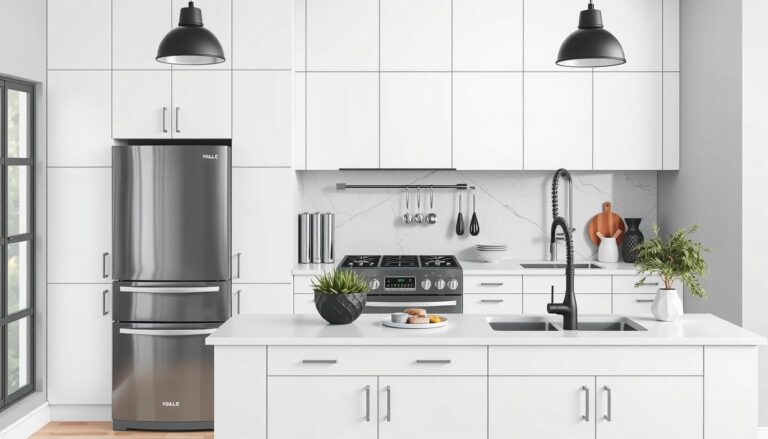
How to Hang Kitchen Cabinets: Step-by-Step for a Perfect Fit
Most people think how to hang kitchen cabinets is just about screwing boxes to the wall and calling it a day. I used to believe that too. But here’s the kicker: a few misaligned cabinets or a missed stud can throw off your entire kitchen, causing doors to swing open on their own or countertops that never sit flush.
Getting cabinets up straight, secure, and seamless takes more than brute force or a few quick measurements. It’s a methodical process—one that rewards careful prep, smart tool choices, and a steady hand. I’ve learned that skipping even one step can mean hours of rework or costly repairs.
Let me give you a real-world example. I once rushed through a cabinet installation for a client, thinking my experience would make up for lack of planning. The result?
An upper cabinet that sagged slightly, making the entire row look off. Fixing it meant taking everything down and starting over. That’s why I always recommend a step-by-step approach.
Stick with me and I’ll walk you through a proven system to hang kitchen cabinets like a pro—straight, sturdy, and frustration-free.
Gather Essential Tools and Materials
Let me walk you through the gear I always assemble before starting any how to hang kitchen cabinets project. Having the right tools close at hand speeds up the process and reduces mistakes. I double-check my kit every time because missing a single item—like a stud finder—can bring the whole job to a halt.
Here’s what you’ll want ready:
- Stud finder: Locates wall studs for secure mounting.
- Drill/driver set: For drilling pilot holes and driving screws.
- Level (4-foot recommended): Ensures cabinets are perfectly straight.
- Tape measure: Critical for accurate placement.
- Clamps: Hold cabinets together while fastening.
- Screws (2.5-3 inches): Heavy-duty, made for cabinetry.
- Shims: For leveling on uneven walls.
- Pencil and masking tape: For marking lines and placement.
One project stands out: I once started hanging cabinets in a home built in the 1950s. The walls were anything but straight. My shims, extra-long screws, and patience saved the day.
That experience taught me to expect surprises and always overprepare.
Prepare My Kitchen Space for Installation
Next, I focus on prepping the actual work area. A clean and organized kitchen lets me avoid damage and work efficiently. I always remove everything from the walls and clear countertops entirely.
Dust, debris, or leftover hardware from old cabinets can get in the way or scratch new surfaces.
Here’s my go-to prep checklist:
- Remove old cabinets, appliances, and trim from the workspace.
- Cover countertops, floors, and appliances with heavy drop cloths or cardboard.
- Mark all stud locations and cabinet reference lines on the wall with a pencil and level.
- Test for level/plumb walls using a 4-foot level—mark any uneven spots that may need shimming.
For example, once I was working in a tight galley kitchen. I protected a quartz countertop with thick cardboard and moved the fridge across the room. That simple prep step prevented costly scratches and let me maneuver the cabinets without worry.
Trust me, the right prep saves time and headaches down the road.

Find and Mark the Studs Accurately
Let’s get real—hanging heavy cabinets means anchoring them securely. That all starts with accurately marking the wall studs. If you skip this, you risk wobbly cabinets and wall damage.
I always grab a reliable stud finder and work methodically across the area where the cabinets will go.
Here’s my go-to process:
- Run the stud finder horizontally at cabinet height, marking each stud’s center with a pencil.
- Double-check each mark by tapping lightly with a hammer—solid thuds usually mean you’ve found wood, not just drywall.
- Use a long level or straightedge and draw vertical lines up the wall for each stud. This helps maintain alignment throughout installation.
For example, in a recent remodel, I discovered an unexpected gap between studs behind a corner cabinet. My early stud mapping saved me from drilling into empty drywall. Never assume stud spacing is precise—always verify every stud location before moving on.
Measure and Mark Cabinet Placement
Once my studs are mapped, I shift focus to precise cabinet layout. Accurate measurement and marking ensure perfectly aligned cabinets and even reveals. I start by measuring up from the finished floor to establish my reference line for the bottom of the wall cabinets—usually 54 inches above the floor for standard 18-inch backsplashes.
My step-by-step:
- Draw a horizontal level line on the wall for the cabinet bases.
- Mark the top line for upper cabinets, double-checking with a level.
- Outline the cabinet edges, labeling each position (left, right) to avoid confusion during hanging.
Last month, I marked out a tricky kitchen with a sloped ceiling. My careful reference lines kept the cabinets level, even though the ceiling wasn’t. Measure twice, mark clearly, and you’ll dodge frustrating adjustments later.
Install the Support Rail for Upper Cabinets
Now that I’ve got my layout lines on the wall, it’s time to add a support rail—a trick I never skip. This simple strip of scrap wood acts as a temporary ledge, making it much easier to line up the cabinets and hold them in place while I secure them.
First, I cut a straight 1×4 board to match the length of my upper cabinet run. Using a level, I align the top edge of the rail with the bottom line marking my upper cabinets. I drive 2.5″ screws into the studs I marked earlier, making sure the rail’s rock solid—wobbly rails spell disaster.
Pro tip: Even if you’re working solo, this rail lets you rest the heavy cabinet boxes while you fine-tune their position. I once saved my arms and sanity hanging eight cabinets in a row using this method.
With the support rail secure, I’m set up for a far smoother installation process.
Hang and Secure the Upper Cabinets
With the support rail in place, I can actually hang the upper cabinets without breaking a sweat. I lift the first cabinet onto the rail, making sure it’s flush with the layout lines and hard against the wall. A cabinet jack or a helper comes in handy for longer runs, but even solo, the rail does the heavy lifting.
I drive 2.5″ cabinet screws through the cabinet’s back rail and directly into the studs. I always start with the corner or end unit, checking for level and plumb before tightening fully. Then, I attach the next cabinet, clamp the face frames together, and secure them with screws through the stiles.
Here’s a real-world tip: In one tight kitchen remodel, I pre-drilled all my holes and had screws ready. This sped up the process and kept everything aligned.

Don’t forget: Once all cabinets are secure, remove the support rail and patch any holes left behind.
Position and Attach the Base Cabinets
Once the uppers are secure, I shift focus to the base cabinets. I always start at the highest point on the floor—leveling is easier that way. Using my reference lines, I set the first base cabinet in place, typically at a corner or next to an appliance opening.
I double-check alignment with a level both side-to-side and front-to-back. If your floor is uneven (it often is), I use shims under the cabinet base until it’s perfectly level. Then I clamp adjacent cabinets together, making sure the faces are flush before drilling pilot holes through the side panels and securing them with screws.
Now, I anchor the cabinet to the wall studs using long cabinet screws, always through the sturdy top rail inside the cabinet. I keep the fasteners loose until all bases are in place so I can adjust for a seamless run.
Practical example: When I installed a run of three base cabinets for a friend’s kitchen renovation, the floor varied by nearly half an inch. Shimming methodically, I got the entire run perfectly level before tightening down the screws—saving a huge headache later when installing the countertop.
Check Alignment and Finish the Installation
After all base cabinets are loosely set, I take a step back and assess alignment. I visually inspect every seam and use a level across the entire run—front edges and tops must be perfectly flush. If needed, I tweak shims or loosen screws for micro-adjustments.
Once satisfied, I tighten all cabinet-to-cabinet and wall fasteners. I always re-check with my level after tightening, since things can shift. For any minor gaps between cabinets and walls, I install scribe molding or filler strips for a custom-fit appearance.
Then, I reinstall cabinet doors and drawers, adjusting hinges so the reveals are even. I also attach toe kicks and end panels at this stage.
Pro tip: For a flawless finish, I like to run a bead of caulk where the cabinets meet the wall—especially if the wall isn’t square. This gives the install a truly built-in look and hides minor imperfections.
Putting It Into Practice
Now that you’ve got the process down, it’s time to put your skills to the test. Every kitchen has its quirks—maybe uneven floors or an awkward corner. I once installed cabinets in a 1920s bungalow where nothing was square.
Using a laser level and careful shimming made all the difference, and the result looked seamless and professional.
The real trick is to plan every step, double-check your measurements, and stay organized. If you run into a problem, pause and reassess rather than forcing a fit. Remember, the confidence you build tackling this project translates to every future home improvement job.
Your next step? Gather your tools and mark out your kitchen walls. Take it one section at a time, and don’t rush—precision now means no regrets later.
You’ve got everything you need to master how to hang kitchen cabinets successfully.