what is the best type of cookware: Ultimate Expert-Backed Complete Guide to the Surprising Essential Choice
What is the best type of cookware? The honest answer depends on how you cook, what you cook, and how much maintenance you will tolerate. A single “best” material does not exist because cookware is a tool, and tools are chosen for tasks. Stainless steel excels at searing and pan sauces. Cast iron thrives on high heat and long braises. Nonstick makes delicate eggs easy. Copper offers speed and precision, but at a price.
Look, most home kitchens do not need a museum-worthy set. They need a few reliable pans that heat predictably, clean up without drama, and last for years. Budget matters, too, because a well-built midrange skillet used daily often outperforms a premium pan that stays in the cabinet.
This guide breaks down how to choose cookware by cooking style, compares the major materials, and flags health and durability priorities that actually affect performance. Expect practical recommendations, not brand hype. Clear criteria. Real trade-offs. Better meals.
How to Choose the Best Cookware for Your Cooking Style and Budget
Start with your stove and your habits. Gas is forgiving and works with almost anything. Induction is picky: you need magnetic cookware, typically stainless steel or cast iron. Electric coil and smooth-top electric prefer flat bottoms for stable contact. If the pan rocks, heat distribution suffers. Fast.
Next, define your cooking style. If you brown meat, build fond, and deglaze for sauces, prioritize stainless steel or carbon steel. If you make stews, chili, and bread, cast iron or enameled cast iron will feel effortless. If you cook quick breakfasts and fish, nonstick earns its keep. But here’s the thing: no one material covers every job well.
Budget planning works best when you buy by function, not by “set.” A typical, high-utility lineup includes:
- 10–12 inch skillet (stainless or cast iron)
- Nonstick skillet for eggs and delicate proteins
- 2–4 quart saucepan for grains, sauces, reheating
- 6–8 quart stockpot or Dutch oven for soups and braises
Real-world example: a weeknight cook with a $250 budget and an induction range can do 90% of meals with a tri-ply stainless 12-inch skillet, a 3-quart stainless saucepan, and a modest nonstick pan for eggs. Add an enameled Dutch oven later for bread and braises. That is a smarter path than buying a 10-piece set with thin pans that warp.
Use these purchase filters to avoid regret:
- Heat performance: thick bases, multi-layer construction, flat bottoms.
- Comfort: handles that stay stable and do not dig into your hand.
- Care reality: if you will not season, do not buy raw cast iron as your only skillet.
- Warranty and reputation: established manufacturers with clear material specs.
Cookware Materials Compared: Stainless Steel, Cast Iron, Carbon Steel, Nonstick, and Copper
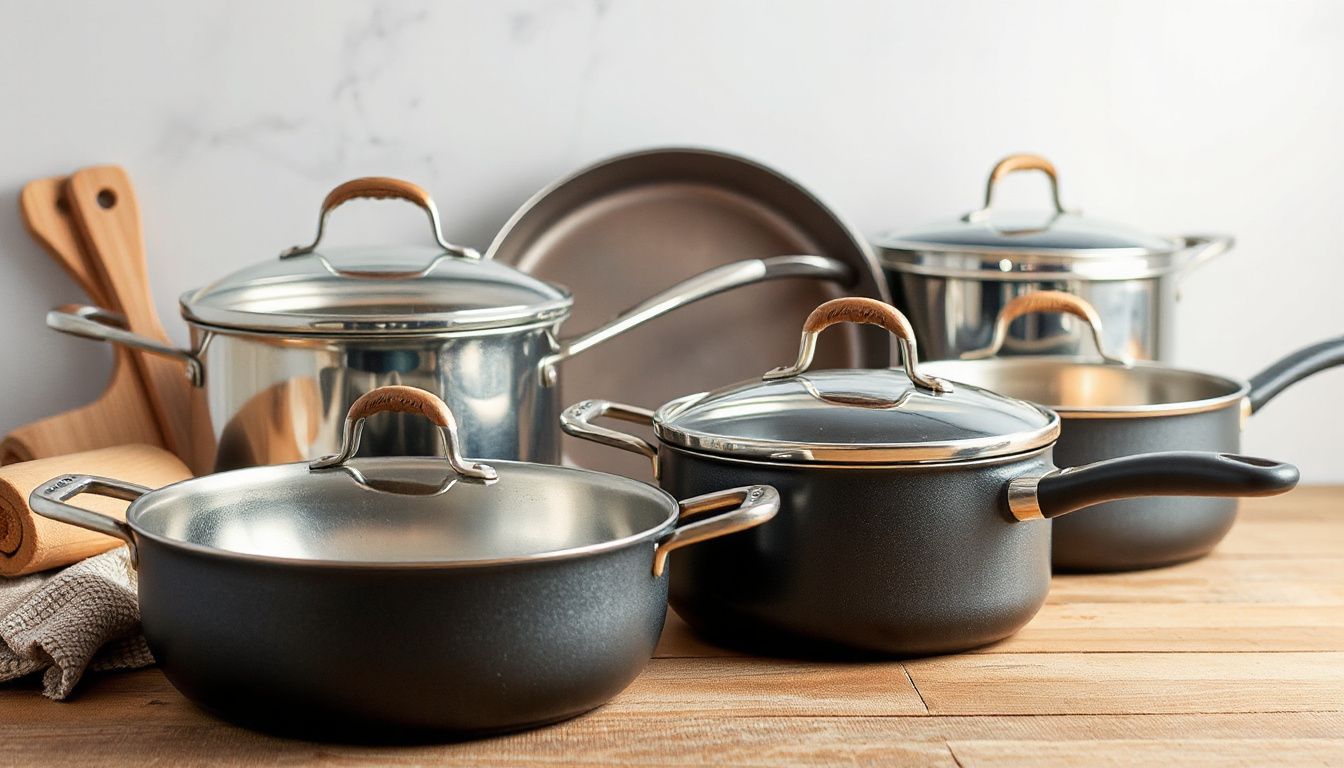
Materials dictate how cookware heats, how it releases food, and how much work it takes to maintain. Stainless steel is the workhorse because it is durable, nonreactive, and versatile. The best stainless pans use aluminum or copper cores to improve heat conduction. Thin, single-layer stainless tends to scorch. Quickly.
Cast iron holds heat exceptionally well. It is not the fastest to respond, but it is steady, which helps with searing and oven cooking. Enameled cast iron adds a nonreactive coating, making it better for tomato sauces and long simmers without metallic flavors. Carbon steel sits between stainless and cast iron: lighter than cast iron, seasons into a natural nonstick surface, and responds faster to heat changes.
Nonstick (typically PTFE-based) is about easy release, not high-heat searing. It is ideal for eggs, pancakes, and fragile fish. The trade-off is lifespan; coatings wear. Ceramic nonstick can feel slick at first but often loses performance sooner than PTFE in real kitchens.
Copper is the precision instrument. It heats and cools rapidly, which is why professionals like it for sauces and sugar work. Most copper cookware is lined with stainless steel or tin to prevent reactivity. It is expensive and needs polishing if you care about appearance.
| Material | Best For | Strengths | Trade-Offs |
|---|---|---|---|
| Tri-ply stainless steel | Searing, sauces, everyday cooking | Durable, nonreactive, induction-friendly | Food can stick without proper preheat and fat |
| Cast iron / enameled cast iron | Searing, baking, braising | Heat retention, oven-safe, long life | Heavy; raw cast iron needs seasoning |
| Carbon steel | Stir-fry, searing, crepes | Fast response, seasons well, lighter than cast iron | Needs seasoning; can rust if neglected |
| PTFE nonstick | Eggs, fish, low-stick cooking | Easy release, quick cleanup | Not for high heat; coating wears over time |
| Copper (lined) | Sauces, candy, precision heat | Top-tier responsiveness | Costly; maintenance; not always induction-ready |
Health, Safety, and Durability: What to Avoid and What to Prioritize
Cookware safety is mostly about material quality, temperature discipline, and surface condition. Start with nonstick: reputable PTFE coatings are widely used, but they are not designed for ripping-hot sears. Keep nonstick at low to medium heat, avoid empty-pan preheating, and replace pans when the coating is scratched or peeling. Simple rule. If it is flaking, it is done.
For stainless steel, prioritize multi-layer construction and reputable manufacturing. Cheap stainless can warp and create hot spots that burn oil and food, which increases smoke and cleanup. Stainless is generally nonreactive, so it is a strong choice for acidic foods like tomato sauce, wine reductions, and citrus-forward dishes.

Cast iron and carbon steel are safe and durable when maintained. Seasoning is polymerized oil, not a chemical coating, but it can be damaged by aggressive detergents or long soaks. Dry promptly. Oil lightly. Store dry. These steps prevent rust and preserve the cooking surface.
Copper needs a lining because unlined copper can react with acidic foods. Most modern copper pans use stainless steel linings, which are low-maintenance and stable. Tin linings are traditional and perform beautifully, but they can wear and may require re-tinning over time.
What to prioritize when safety and longevity matter:
- Stable surfaces: intact nonstick; smooth enamel; no deep pitting.
- Heat tolerance: match the pan to the job (nonstick for gentle cooking, stainless for searing).
- Clear specifications: material thickness, ply count, lining type, oven-safe temperatures.
- Practical care: dishwasher claims are not the same as best practice for longevity.
Now, a common durability mistake: using metal utensils in nonstick daily. It may not fail immediately, but micro-scratches add up, and performance drops. Switch to silicone, wood, or nylon. The pan lasts longer, and your food releases better.
The Practical, Expert-Backed Shortlist: Best Cookware Picks by Use Case
If you want the most capable kitchen with the fewest pieces, build around stainless steel, then add specialty pans. Stainless is the best “default” because it handles high heat, acidic ingredients, and repeated use without babying. But here’s the thing: pairing stainless with one nonstick pan is often the sweet spot for real households.
Use-case picks that consistently perform well:
- Everyday skillet (most kitchens): 10–12 inch tri-ply stainless steel skillet for browning, sautéing, and pan sauces.
- Best for steak and high-heat searing: 10–12 inch cast iron skillet, preheated gradually, finished in the oven if needed.
- Best for eggs and delicate fish: 8–10 inch PTFE nonstick skillet used at low to medium heat.
- Best for stir-fry and fast vegetables: carbon steel wok or fry pan, seasoned, used with high heat and movement.
- Best for soups, braises, and bread: 5–7 quart enameled cast iron Dutch oven.
Match cookware to budget with a “good, better, best” mindset. Good: buy fewer pieces with solid construction. Better: upgrade your most-used pan first, usually the skillet or saucepan. Best: add copper only if you will use its responsiveness, especially for sauces, custards, and candy.
Quick decision rules that work:
- If you cook acidic sauces weekly, choose stainless or enameled cast iron.
- If you hate maintenance, avoid raw cast iron as your only pan.
- If you want minimal sticking without technique, keep one nonstick pan and replace it as a consumable.
- If you use induction, confirm magnetic compatibility before buying.
Most people do not need a full set. They need a small system that fits their food, their stove, and their patience level. That is how cookware becomes “best.” In practice.
FAQ: Is stainless steel cookware better than nonstick?
Stainless steel is better for high-heat cooking, searing, and durability. Nonstick is better for low-stick tasks like eggs and delicate fish. Many kitchens perform best with both: stainless for most meals, nonstick for a few specific jobs.
FAQ: What cookware is safest for everyday use?
High-quality stainless steel and enameled cast iron are widely considered the safest, most stable everyday options because they are durable, nonreactive, and not dependent on a fragile coating. Nonstick can be safe when used at appropriate temperatures and replaced when damaged.
FAQ: What is the best cookware for induction cooktops?
Induction requires magnetic cookware. Tri-ply stainless steel and cast iron are the most reliable choices. Carbon steel also works well. Copper and aluminum only work on induction if they have a bonded magnetic base designed for induction compatibility.
Final Thoughts
The best cookware is the cookware that matches your heat source, your most common meals, and your willingness to maintain it. Stainless steel is the most versatile foundation. Cast iron and carbon steel bring searing power and oven performance. Nonstick delivers convenience for delicate foods, with the expectation of periodic replacement. Copper is unmatched for precision, but it is a specialist’s tool.
Choose fewer, better pieces. Upgrade the pan you use most. Treat nonstick gently. And prioritize construction quality over a big boxed set. Your cooking will improve, your cleanup will get easier, and your cookware will last.